BOUND BROOK, NJ · PROJECT CASE STUDY
What does a proper herringbone hardwood installation require?
By the HQ Hardwood Floors team · Published
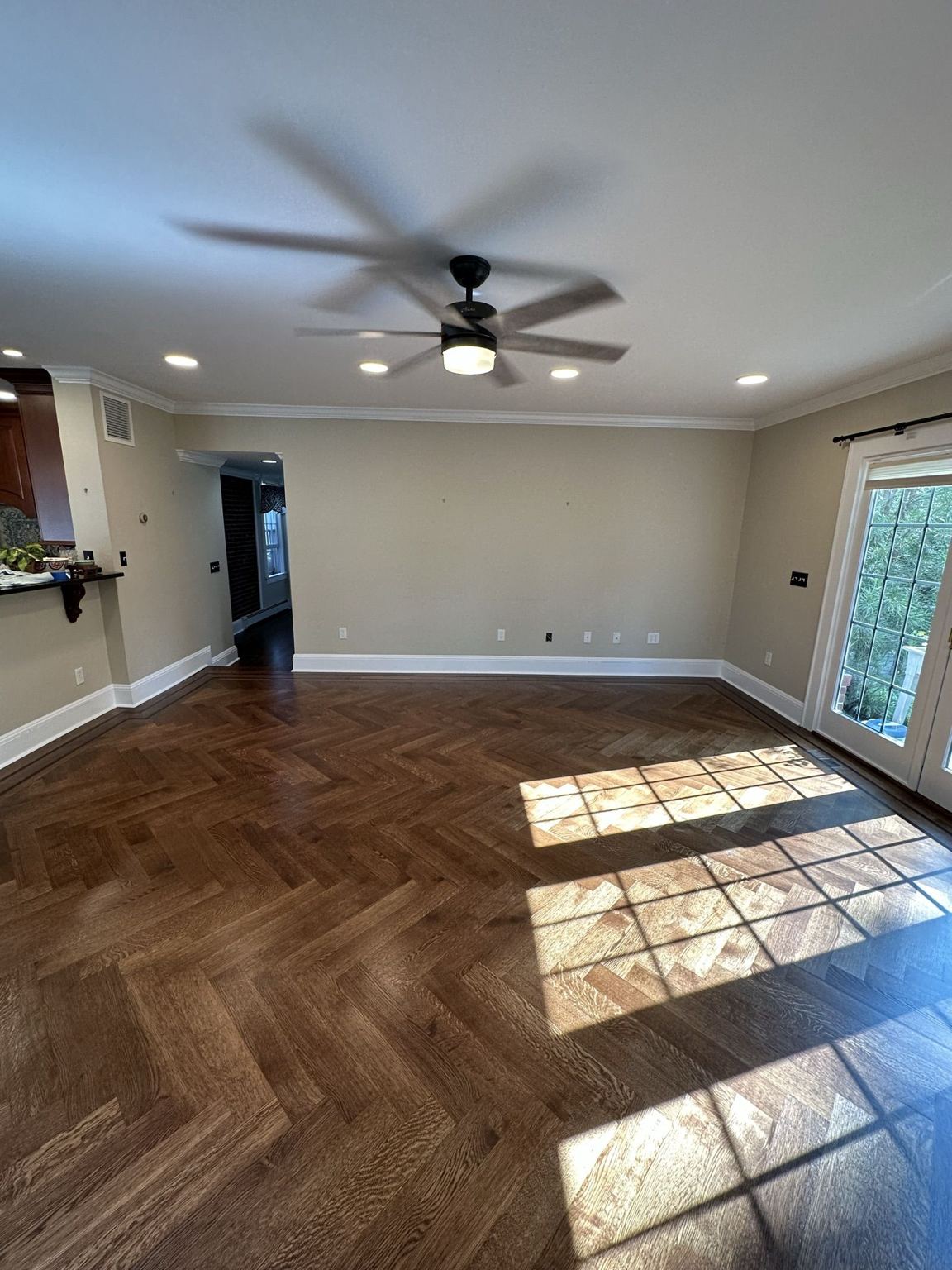
What does a proper herringbone hardwood installation require?
A proper herringbone installation requires a flat, stable substrate, a deliberate moisture plan, an exact starting line, and continuous layout control. Because every board repeats the same angle, small errors multiply across the room. The pattern work only begins after the surface underneath is level, quiet, and ready for the chosen installation system.
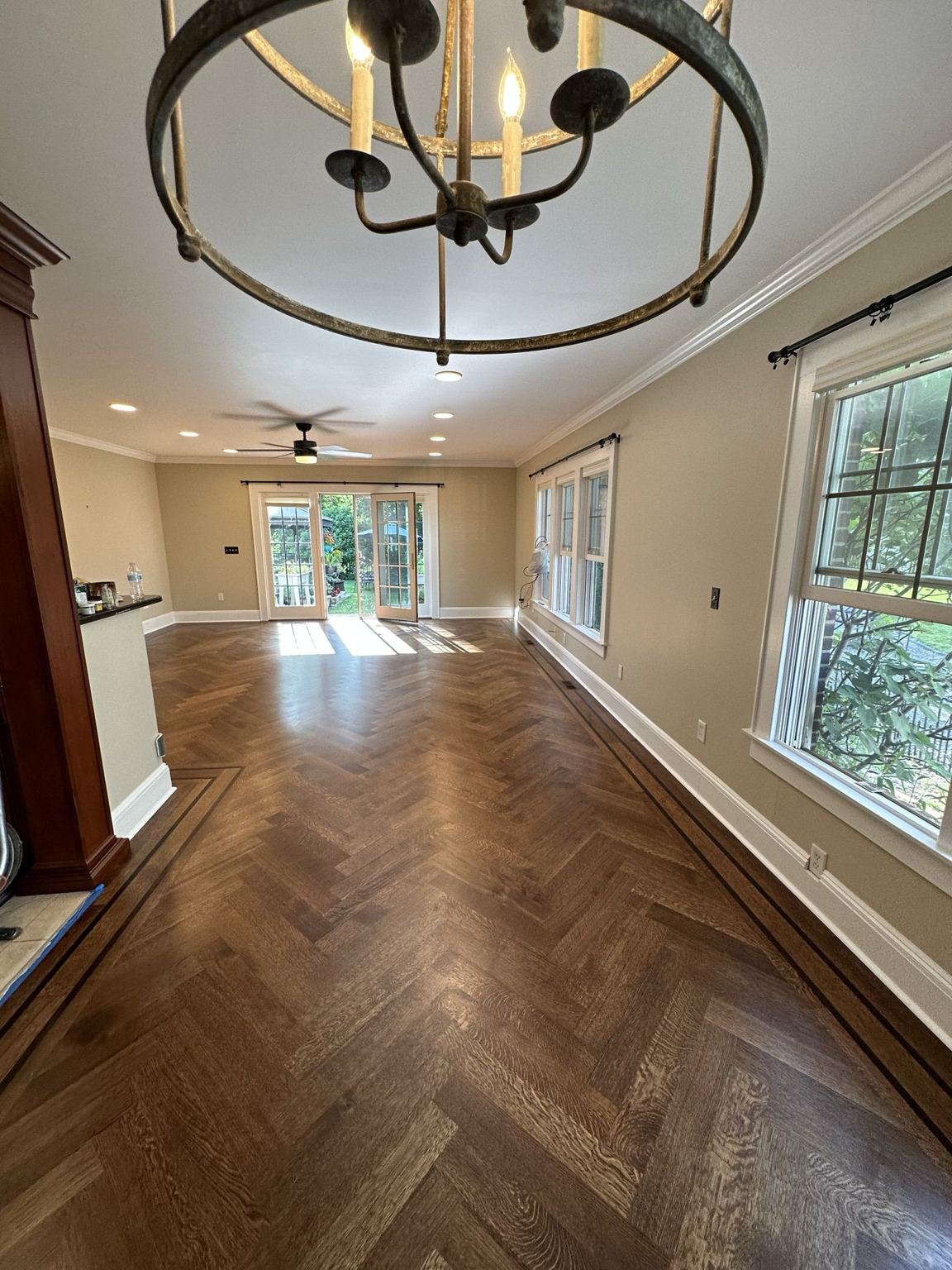
That sequence shaped this HQ project in Bound Brook, New Jersey. The owners wanted rift and quarter sawn white oak in a glue-down herringbone pattern, but the existing house had old laminate, squeaking boards, uneven transitions, and two different substrates. The finished pattern depended on solving those conditions first.
Why did the subfloor need to be leveled before layout?
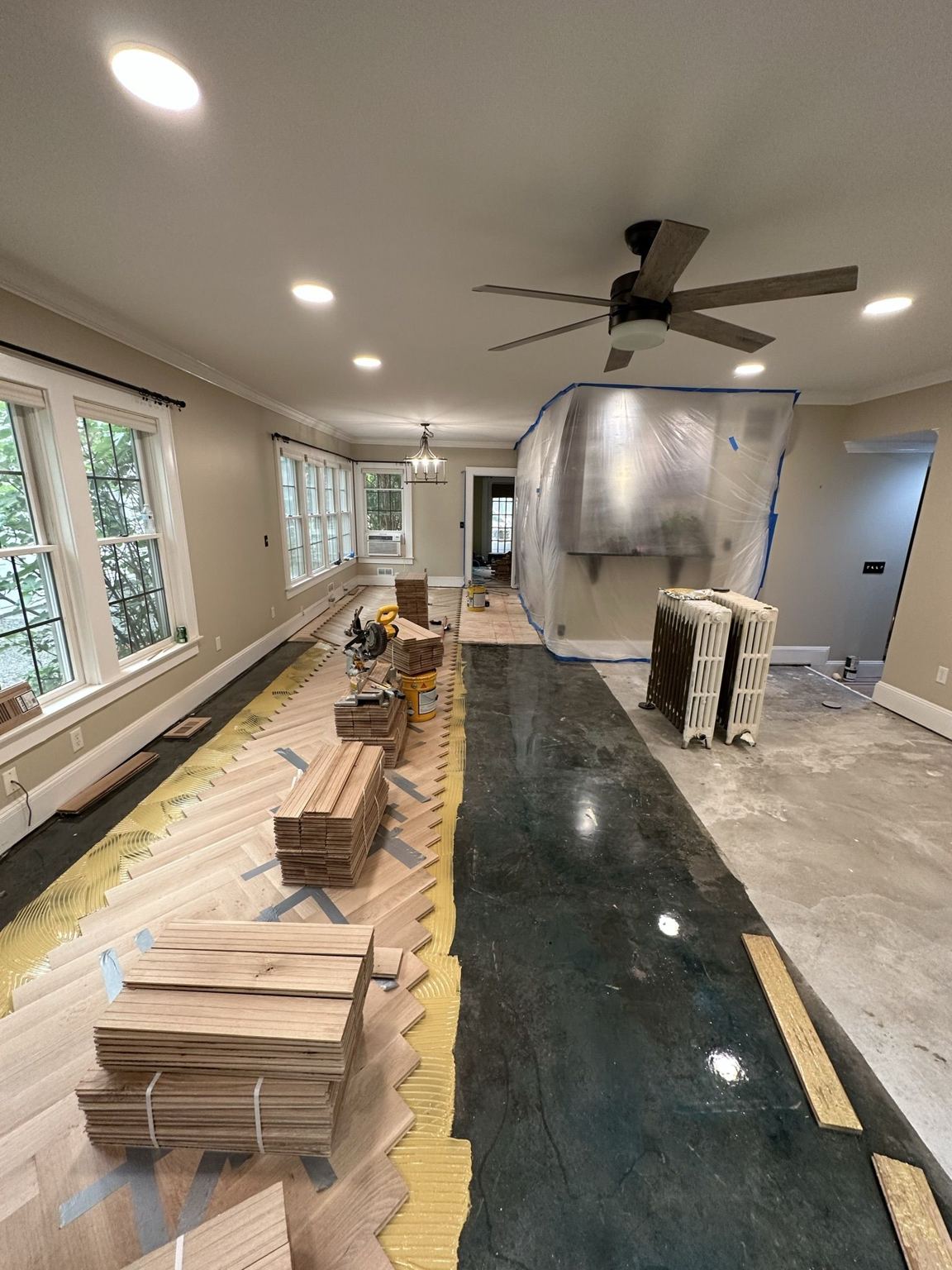
Herringbone exposes subfloor variation quickly. A low or high area can interrupt adhesive contact, create movement, and push the repeating pattern out of alignment. On this project, concrete on one side and plywood on the other sat at different heights, so both surfaces were prepared to create one flat, seamless level before installation began.
The preparation also addressed the squeaks and steps the owners wanted gone. Those details disappear beneath the finished floor, but they determine whether the result feels solid and whether the border meets adjoining rooms cleanly. The most visible work was possible because the invisible work was handled first.
How was moisture handled over concrete and plywood?
Concrete and plywood do not present the same conditions, so the installation plan cannot treat them as one surface. HQ used Bona R540 moisture primer as part of the prepared base and Bona Quantum R851 adhesive throughout the glue-down installation. Product selection followed the actual substrates and installation method documented on this Bound Brook project.
A homeowner comparing herringbone proposals should ask what is under the existing floor, how flatness and moisture conditions will be evaluated, and which preparation steps are included. A pattern allowance and a premium wood selection do not correct an unprepared substrate after the floor is installed.
How was the custom walnut border built into the pattern?
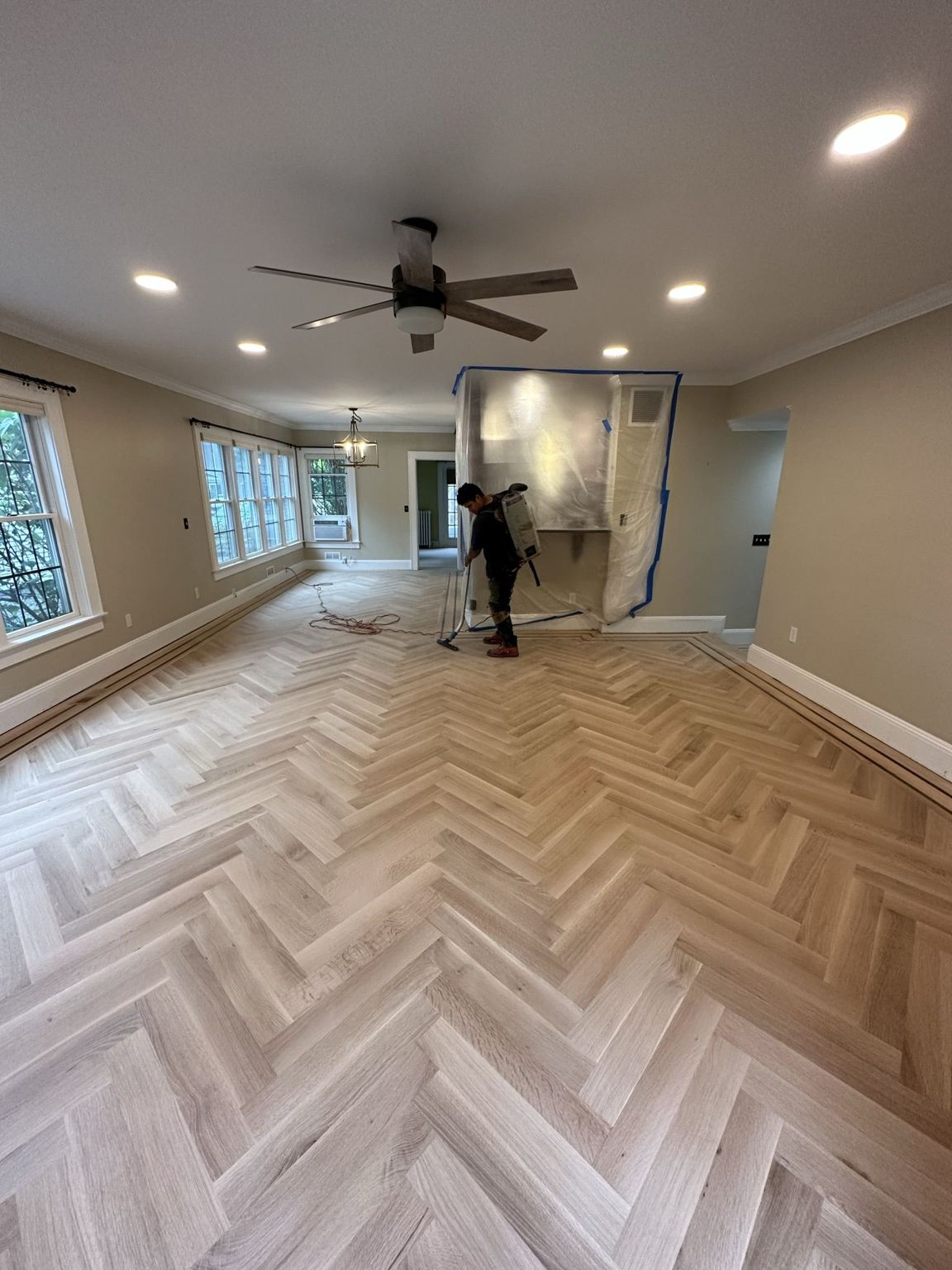
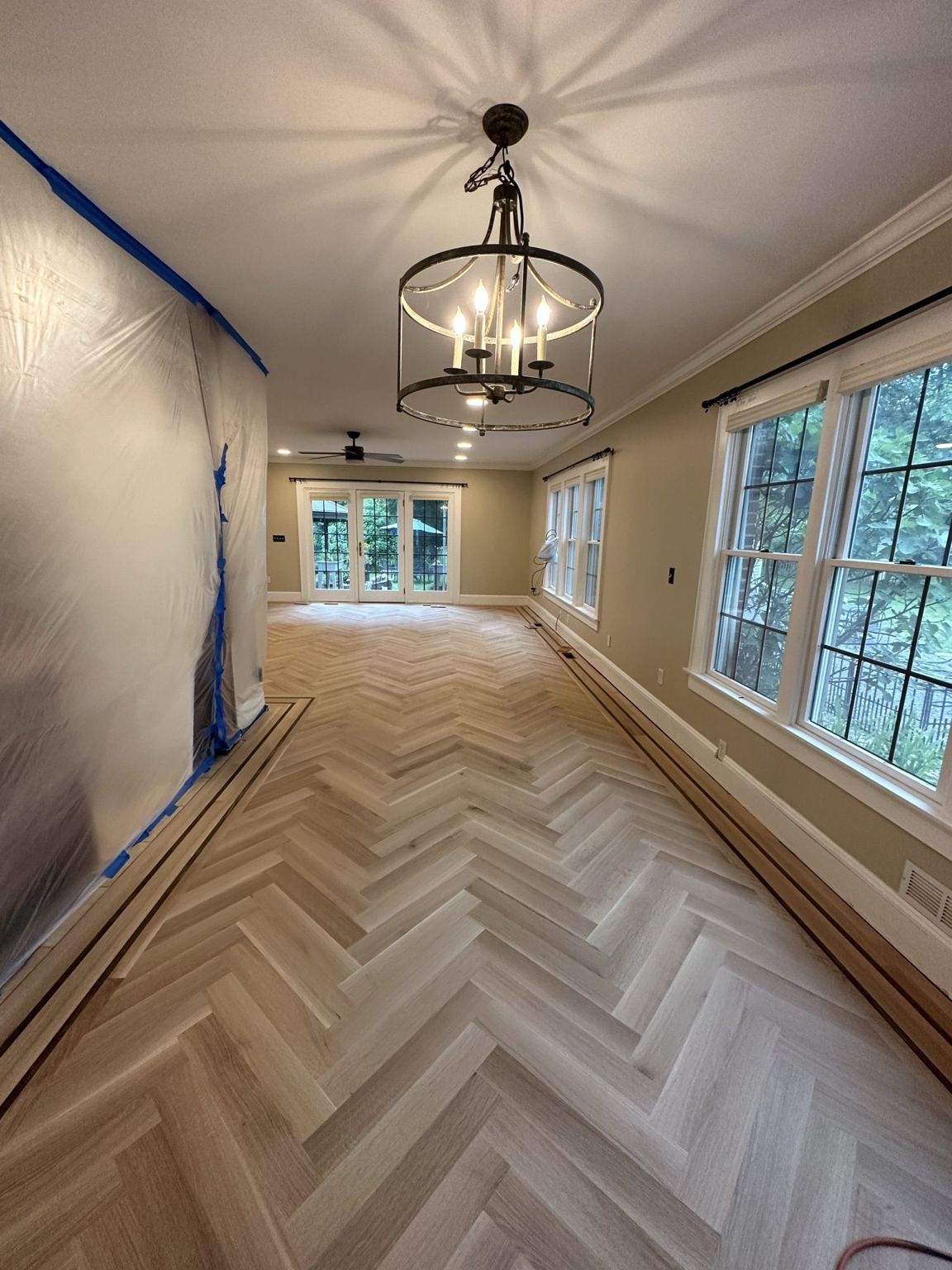
The field was framed with a custom border combining four-inch and two-and-a-quarter-inch boards with twin one-inch walnut strips. That border was planned as part of the floor rather than added as decoration afterward. Its proportions establish a clear transition between the herringbone field, the walls, and the adjoining spaces.
The flush wood vents landed between the walnut strips. To keep those lines visually continuous, the walnut detail was carried across each vent by hand. It is a small part of the room, but it shows why custom flooring must be designed at full-room scale before individual pieces are cut.
What should a Bound Brook homeowner ask before accepting a herringbone quote?
Ask for a written explanation of substrate preparation, moisture planning, layout direction, perimeter treatment, transitions, vents, adhesive, sanding, and finish. Then ask to see one complete project from preparation through completion—not only the final photograph. A credible herringbone proposal should explain how the contractor will control the details you will no longer see.
HQ begins with a floor assessment because the correct scope depends on the room and the structure beneath it. If you are considering herringbone or another custom hardwood pattern in North or Central New Jersey, send the project address, approximate square footage, inspiration images, and photographs of the current floor before the visit.
REAL HQ PROJECT · DOCUMENTED START TO FINISH
The Bound Brook installation sequence
The floor decides. We just read it honestly.
Call or text (201) 926-6797, or book a floor assessment — photos, ZIP code, and the floor’s condition are all we need to point you to the right level of care. More guides in the knowledge center.