NEW JERSEY · CUSTOM PATTERNS · WHAT IT COSTS
How much does a herringbone or chevron hardwood floor cost in New Jersey?
By the HQ Hardwood Floors team · Published
The short answer
A herringbone or chevron floor costs more than the same wood laid straight, and most of the difference is labor and preparation, not the wood. HQ quotes pattern installations only after an in-home assessment, because the substrate, the pattern geometry, the border, and the material decide the price far more than the square footage does. The assessment is free.
One part of a site-finished pattern floor does have a published number: the sanding and finishing. In North and Central New Jersey HQ sands and finishes for roughly $4.00 to $4.75 per square foot, up to about $5.50 with the Bona Chroma low-VOC color system. Installation is quoted on top of that, for your specific floor.
Herringbone versus chevron: the cost difference is in the cut
Herringbone uses rectangular boards laid at 90 degrees to each other, so the boards themselves are standard; the work is in the layout. Chevron boards are cut at an angle on the ends so they meet in a continuous point, which means angled cuts on every piece, more waste, and less tolerance for error at the center line. As a rule, chevron is the more expensive of the two to install for the same room and the same wood.
Both patterns depend on a perfect starting line. On a straight-lay floor a small error hides along the wall; in a pattern floor it shows up as a drifting point down the middle of the room. Layout time is real time, and it is in the price.
What drives the number
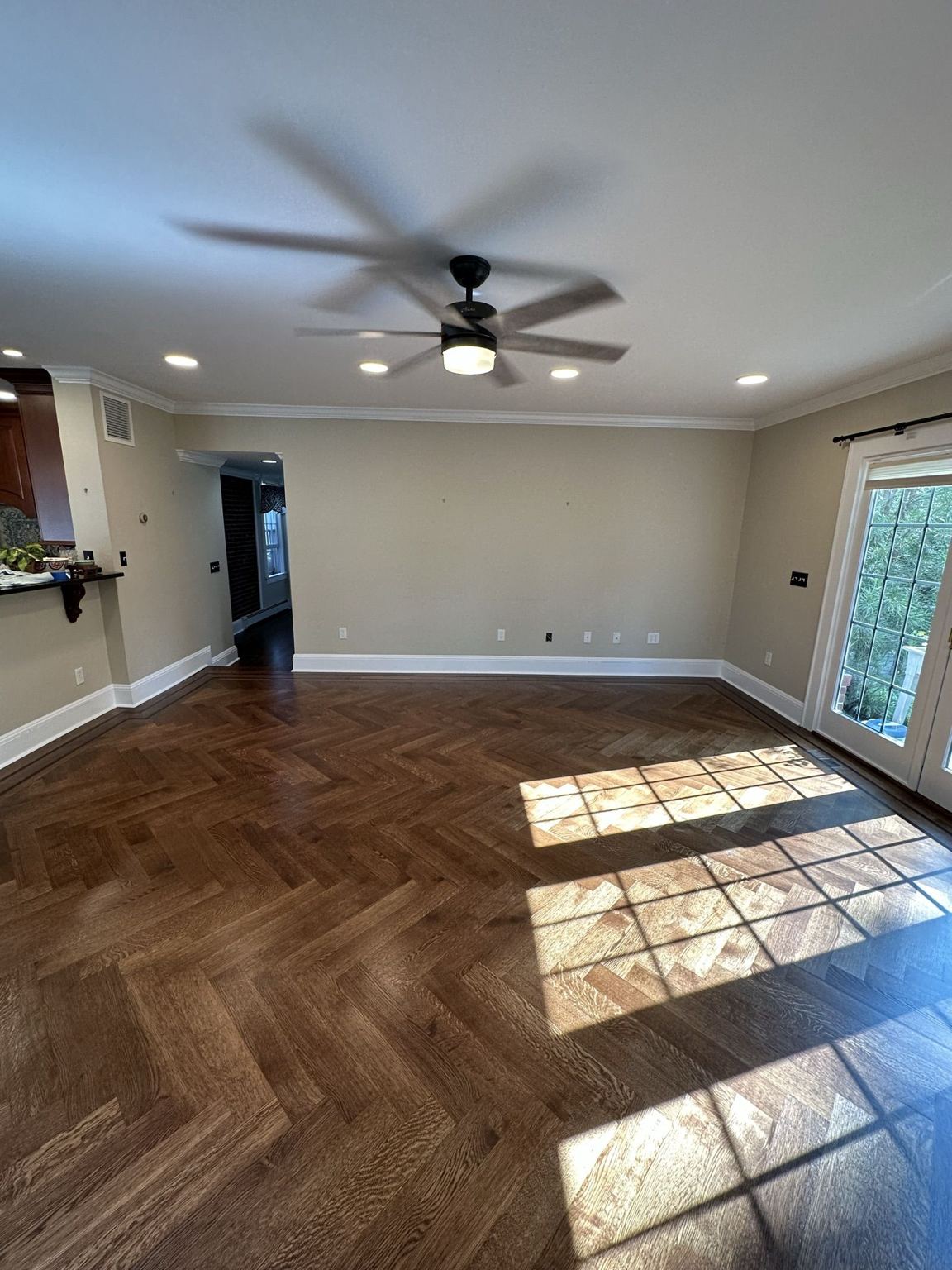
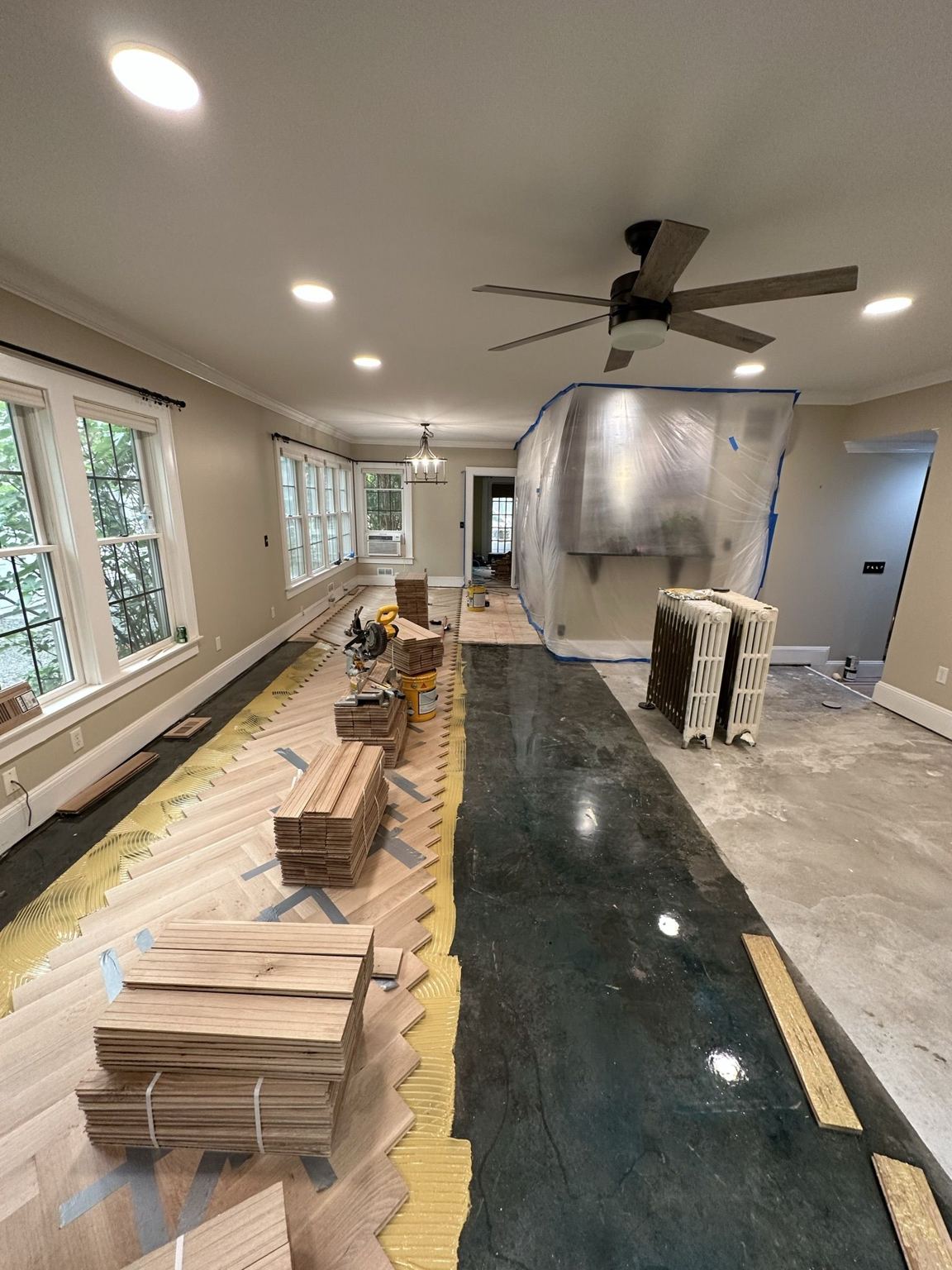
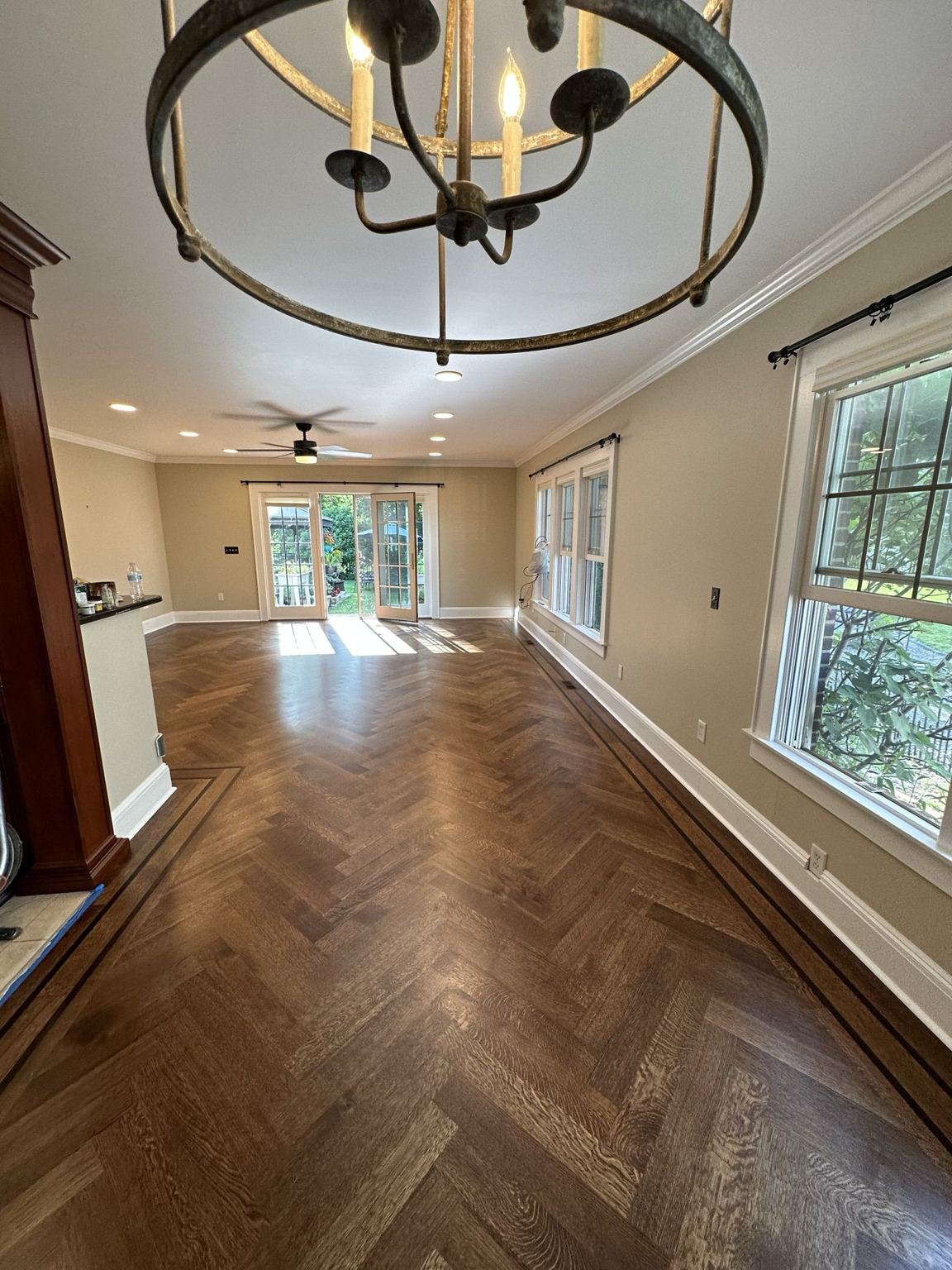
The substrate comes first. Pattern floors are typically glued down, and glue-down needs a flat, sound, dry surface. On HQ’s Bound Brook project the room had concrete on one side and plywood on the other, at different elevations, and both had to be leveled before the first board went down. That preparation is often the largest single line on a pattern installation, and it is invisible in the finished floor.
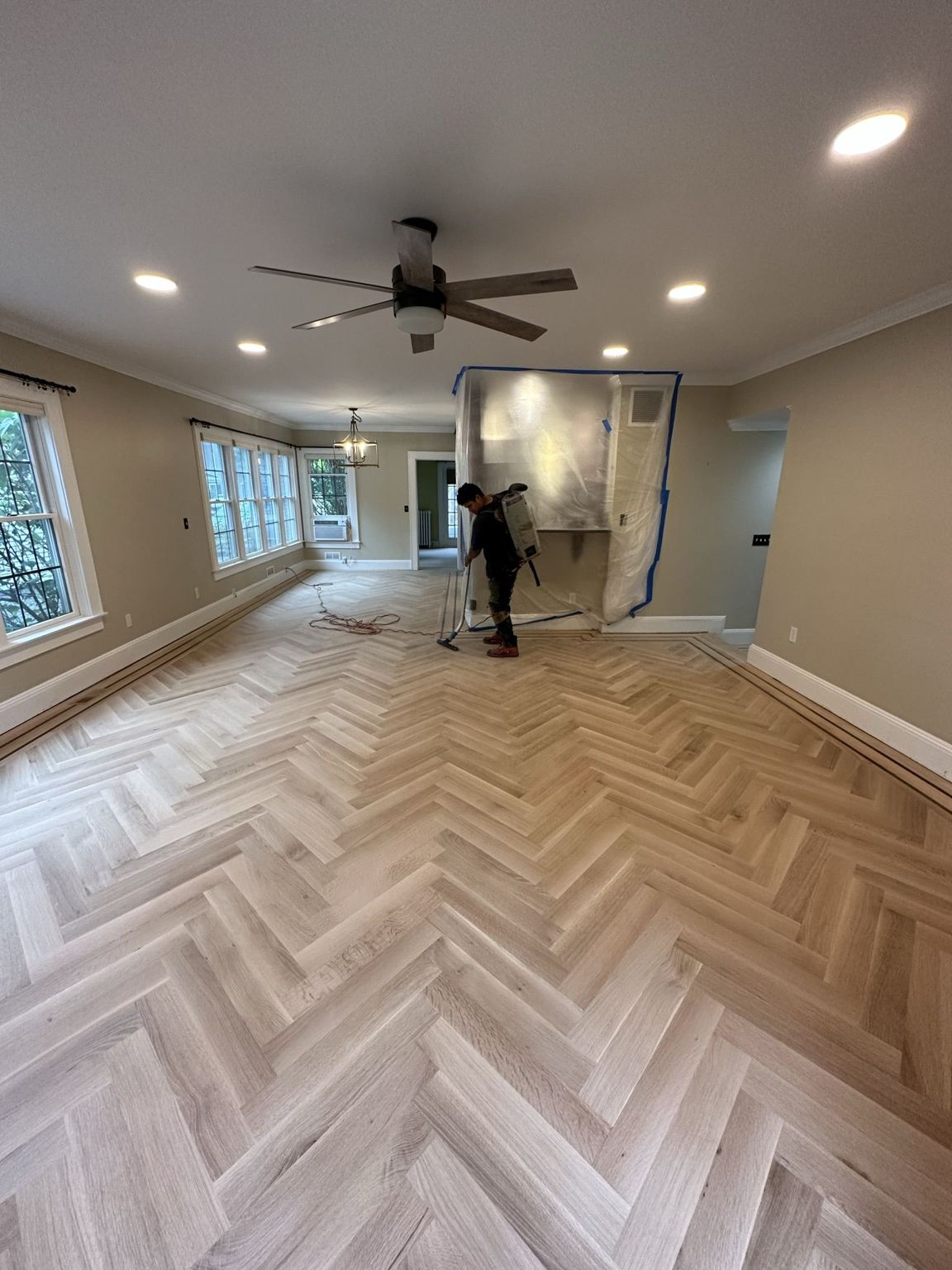
Then the material: species, cut, and grade. Rift-and-quarter-sawn white oak, the wood used in Bound Brook, is chosen for its straight grain and stability in a pattern, and it costs more than plain-sawn material. Board length and width set the scale of the pattern and change the piece count. A solid, site-finished floor and a prefinished engineered pattern floor are priced very differently, and each has cases where it is the better choice.
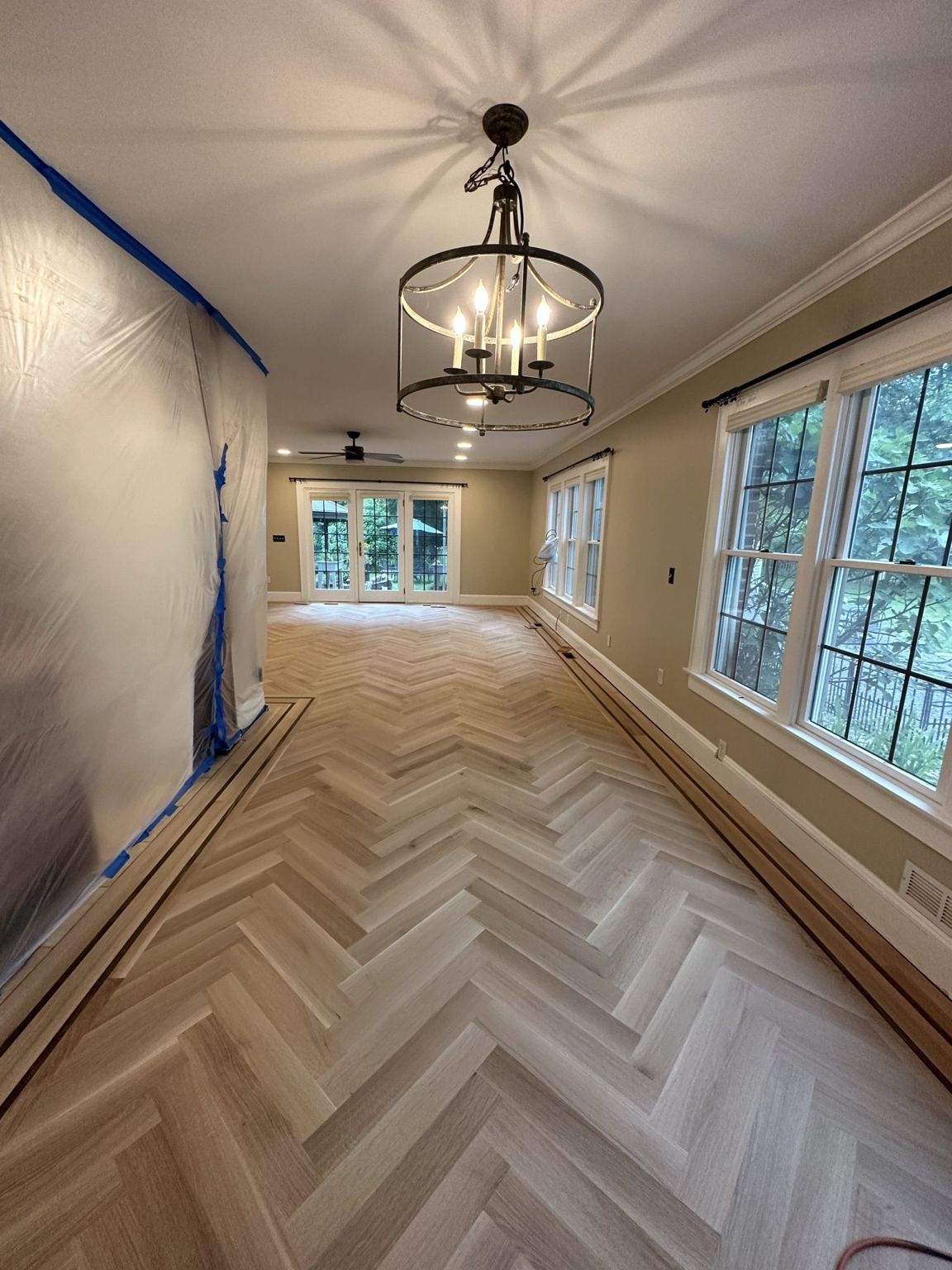
Borders and details add hand work: a perimeter border, contrasting lines, and vents cut flush so the border runs uninterrupted — all of which were part of the Bound Brook floor. Stairs, thresholds, closets, and room-to-room transitions add more. Finally, whether the floor is finished on site (sanded flat as one surface, then sealed and coated) or arrives prefinished changes both the schedule and the cost.
What to decide before you ask for a price
Whether the floor is solid or engineered, and site-finished or prefinished. The pattern, and roughly the board size you have in mind. Whether there is a border, and whether it contrasts. Which rooms, and how the pattern should meet doorways and adjoining floors. And the color direction — natural, lighter, or darker — because a color change on site-finished wood is part of the finishing scope.
You do not need to know the square footage precisely or the exact product. Send photographs of the rooms, the ZIP code, and what you are picturing. Designers and architects working on a project can use the HQ Trade Partner Program to send plans and a finish schedule instead.
How to get a real number
Call or text (201) 926-6797 with your ZIP code, the rooms involved, and photographs of the existing floor and subfloor if it is exposed. HQ will confirm coverage, talk through pattern and material options, and schedule the in-home assessment. The assessment is where the substrate gets checked and the pattern gets priced.
REAL HQ PROJECT · DOCUMENTED START TO FINISH
A real herringbone installation in Bound Brook, NJ
The floor decides. We just read it honestly.
Call or text (201) 926-6797, or book a floor assessment — photos, ZIP code, and the floor’s condition are all we need to point you to the right level of care. More guides in the knowledge center.