NEW JERSEY · INSTALLATION FUNDAMENTALS
Why does moisture testing matter before hardwood installation in New Jersey?
By the HQ Hardwood Floors team · Published
| Surface | What is evaluated | What it can change |
|---|---|---|
| Wood flooring | Moisture content and conditioning | Delivery, acclimation, or installation timing |
| Wood subfloor | Representative moisture-content readings | Preparation and whether installation should proceed |
| Concrete slab | Manufacturer-required concrete moisture test | Mitigation system, adhesive, or schedule |
What is moisture testing before hardwood installation?
Moisture testing measures conditions in the wood flooring and the surface beneath it before installation. The purpose is not to produce one reassuring number; it is to determine whether the material, subfloor, room conditions, installation method, and specified products are compatible—or whether the source of an elevated reading must be addressed first.
The National Wood Flooring Association states that installers need to know the moisture content of both the wood flooring and the substrate at the time of installation. That distinction matters because a wood subfloor and a concrete slab require different test methods and can lead to different preparation decisions.
Why must both the flooring and the subfloor be tested?
Wood responds to the environment around it, while the subfloor can introduce a separate moisture condition from below. Testing only the boards or only the substrate leaves half of the assembly unknown. The readings must be interpreted together with temperature, relative humidity, flooring construction, installation method, and the manufacturers' requirements.
There is no single pass/fail number that honestly covers every hardwood floor. Species, board width, engineered or solid construction, meter settings, wood or concrete substrate, adhesive, and expected living conditions all affect the decision. A contractor should be able to explain which requirement applies to the specific system being proposed.
How should a wood subfloor be checked?
A wood subfloor should be tested with a properly configured moisture meter at representative locations throughout the project. Current NWFA installation guidance calls for at least 20 readings in the first 1,000 square feet, additional readings beyond that area, and at least three tests in every room receiving wood flooring.
The same guidance calls for extra attention near exterior walls and plumbing, and for high readings to be identified, documented, and addressed before installation. Readings should be dated and recorded rather than reduced to a verbal statement that the floor was 'dry enough.' The location of an elevated result can be as important as the average.
How is testing a concrete slab different?
Concrete is not evaluated with the same procedure used for a plywood subfloor. The test method must follow the flooring, adhesive, and mitigation manufacturers' requirements. The NWFA jobsite checklist separately records concrete relative-humidity, surface-meter, calcium-chloride, or other required tests, along with the method, locations, and results.
The slab also needs a broader evaluation: surface condition, flatness, cracks, contamination, existing treatments, and its relationship to exterior grade can affect the installation plan. Moisture is one part of substrate readiness, not a substitute for checking the rest of the surface.
Does a moisture barrier eliminate the need for testing?
No. A moisture-control product is selected after testing; it does not make the original conditions irrelevant. The current Bona R540 technical data sheet defines permitted uses, application rates, drying windows, compatible adhesives, and conditions where the product should not be used. Those instructions depend on knowing the substrate and installation system first.
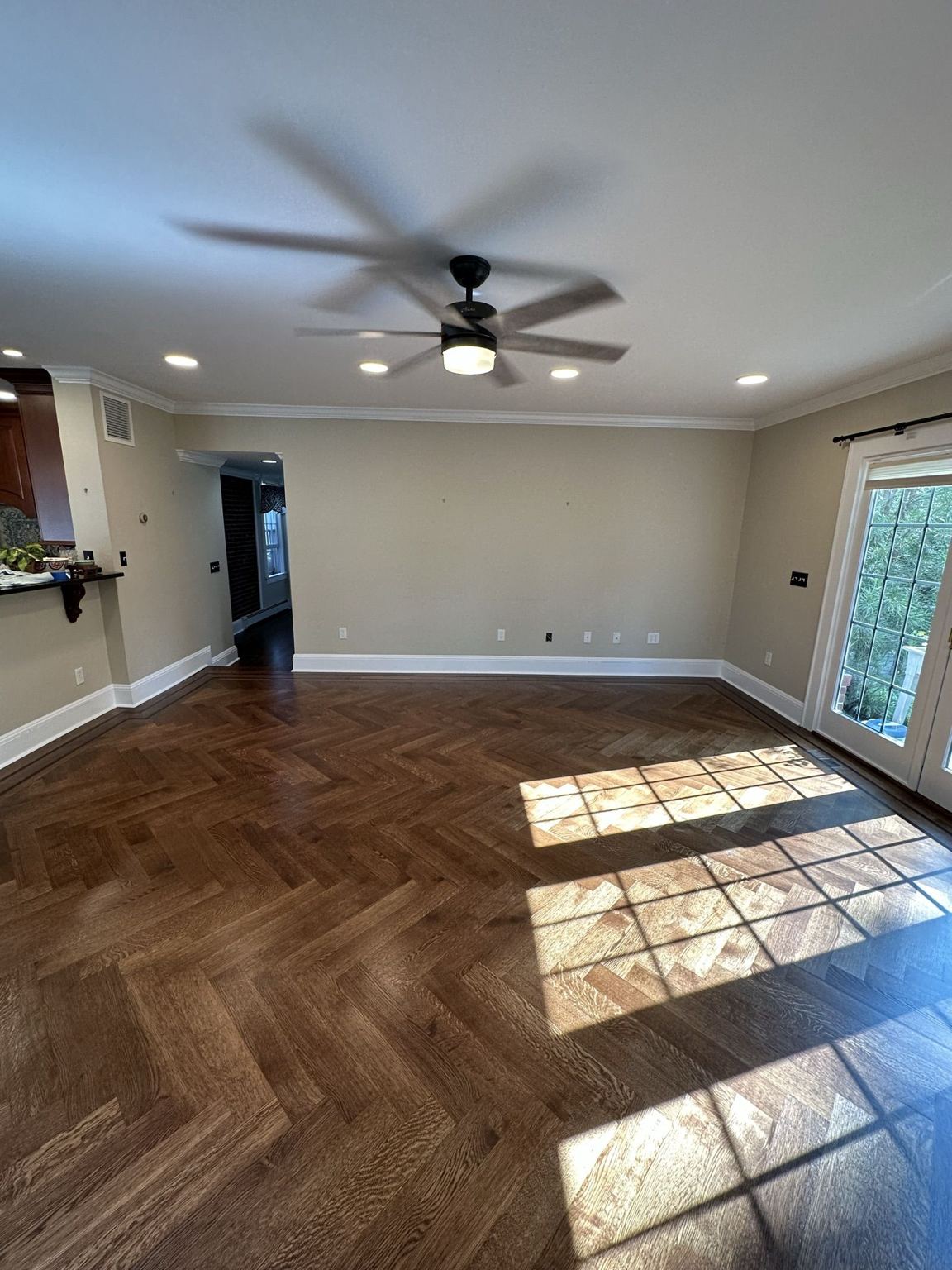
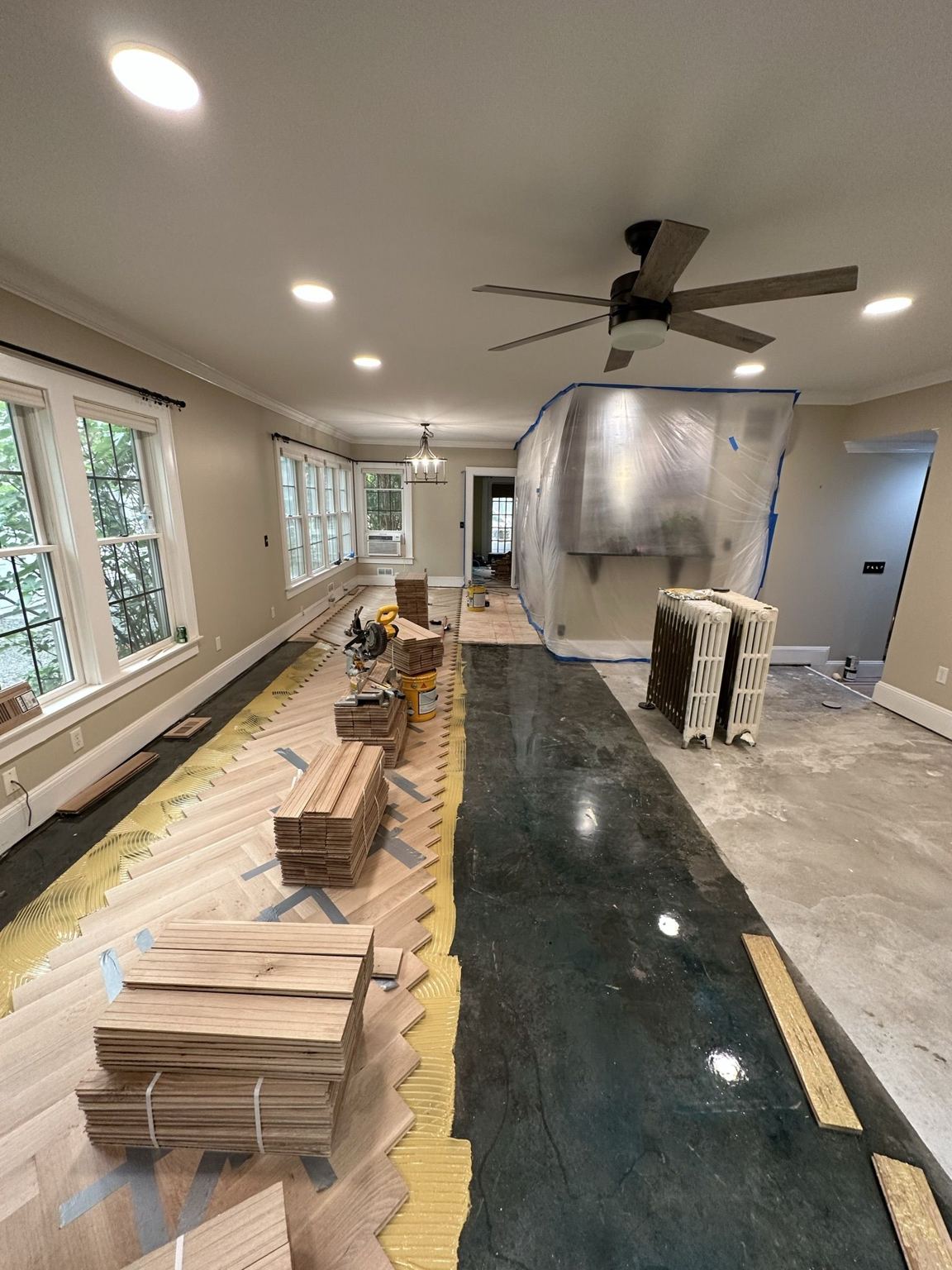
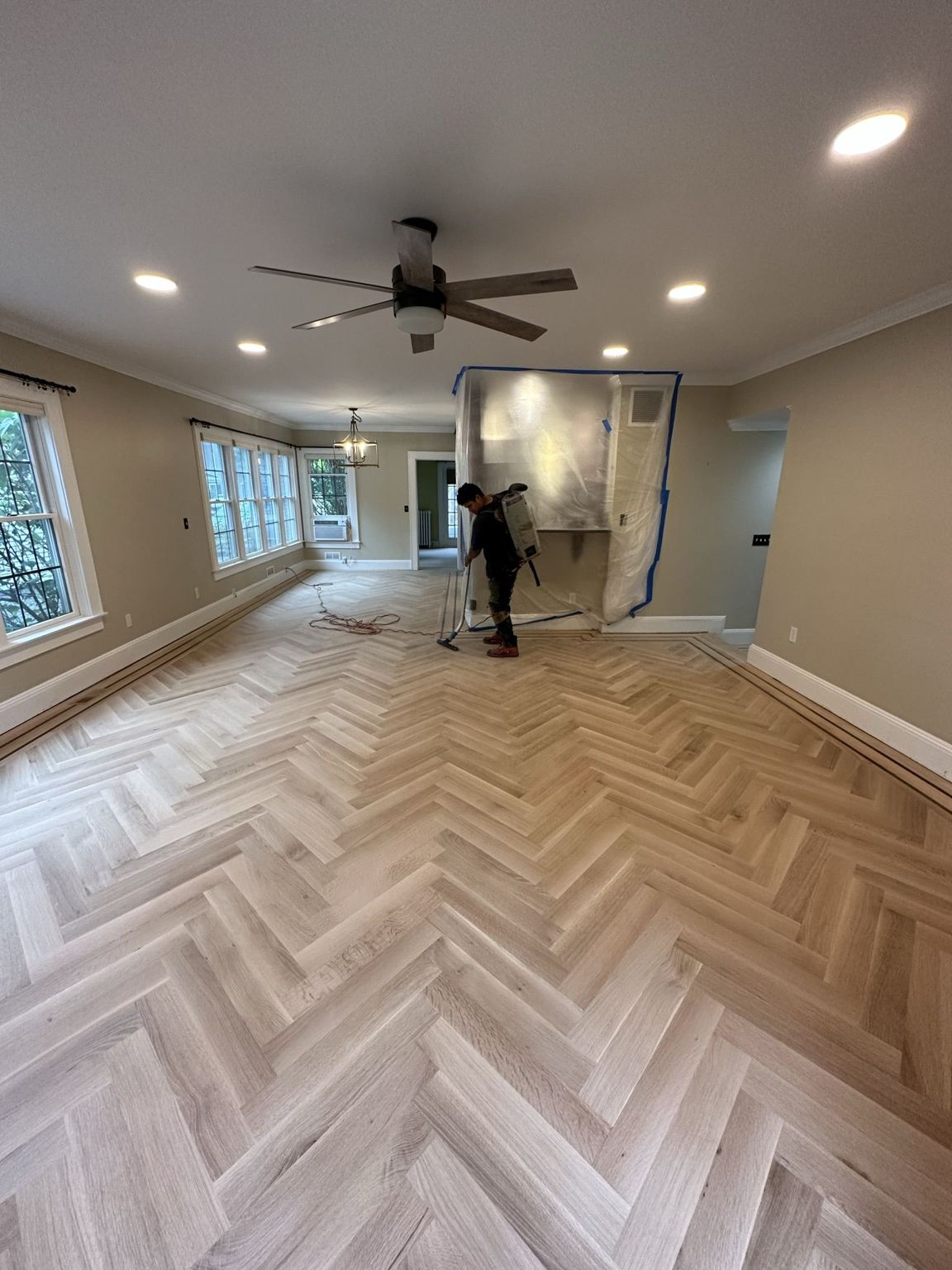
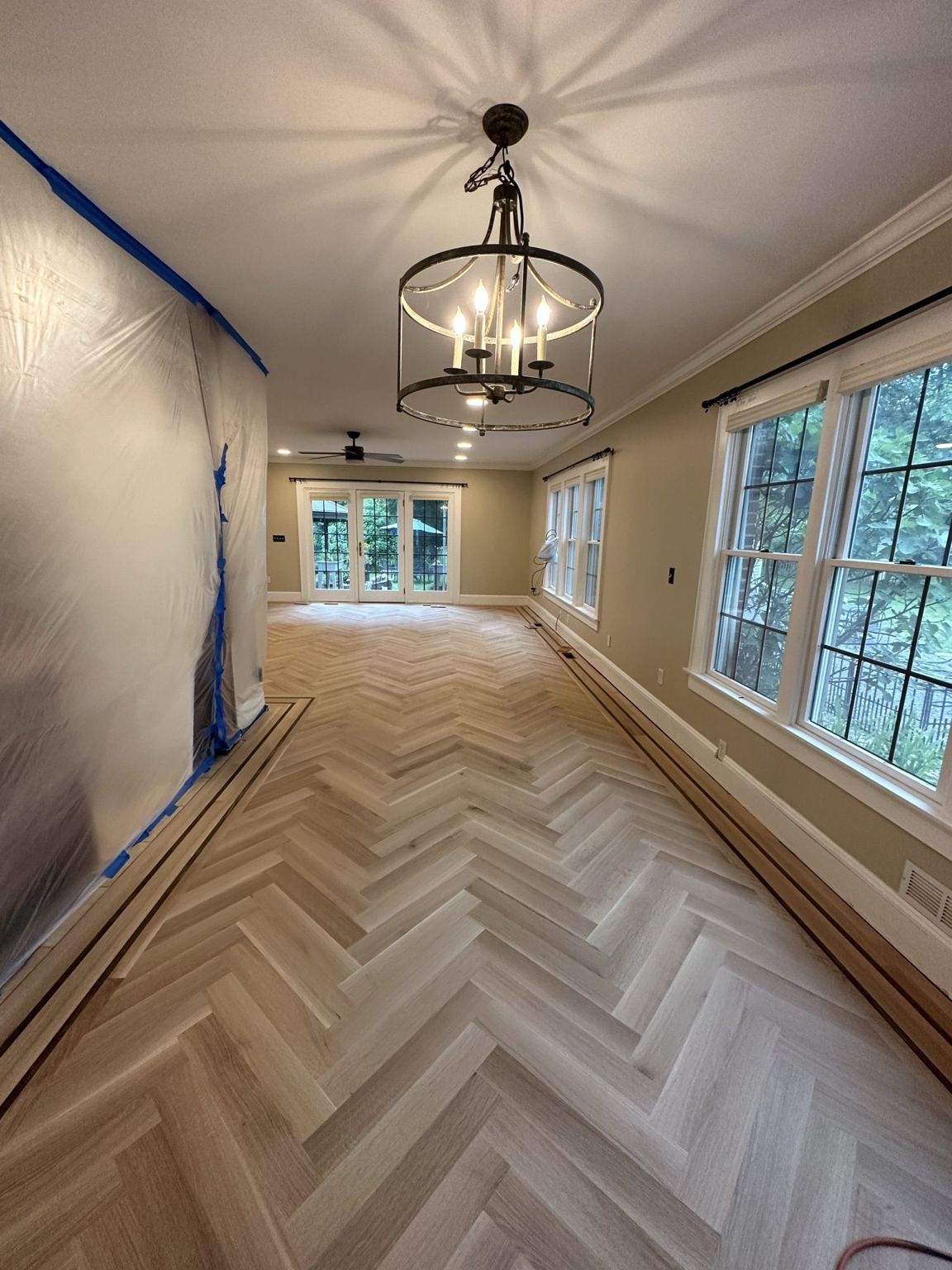
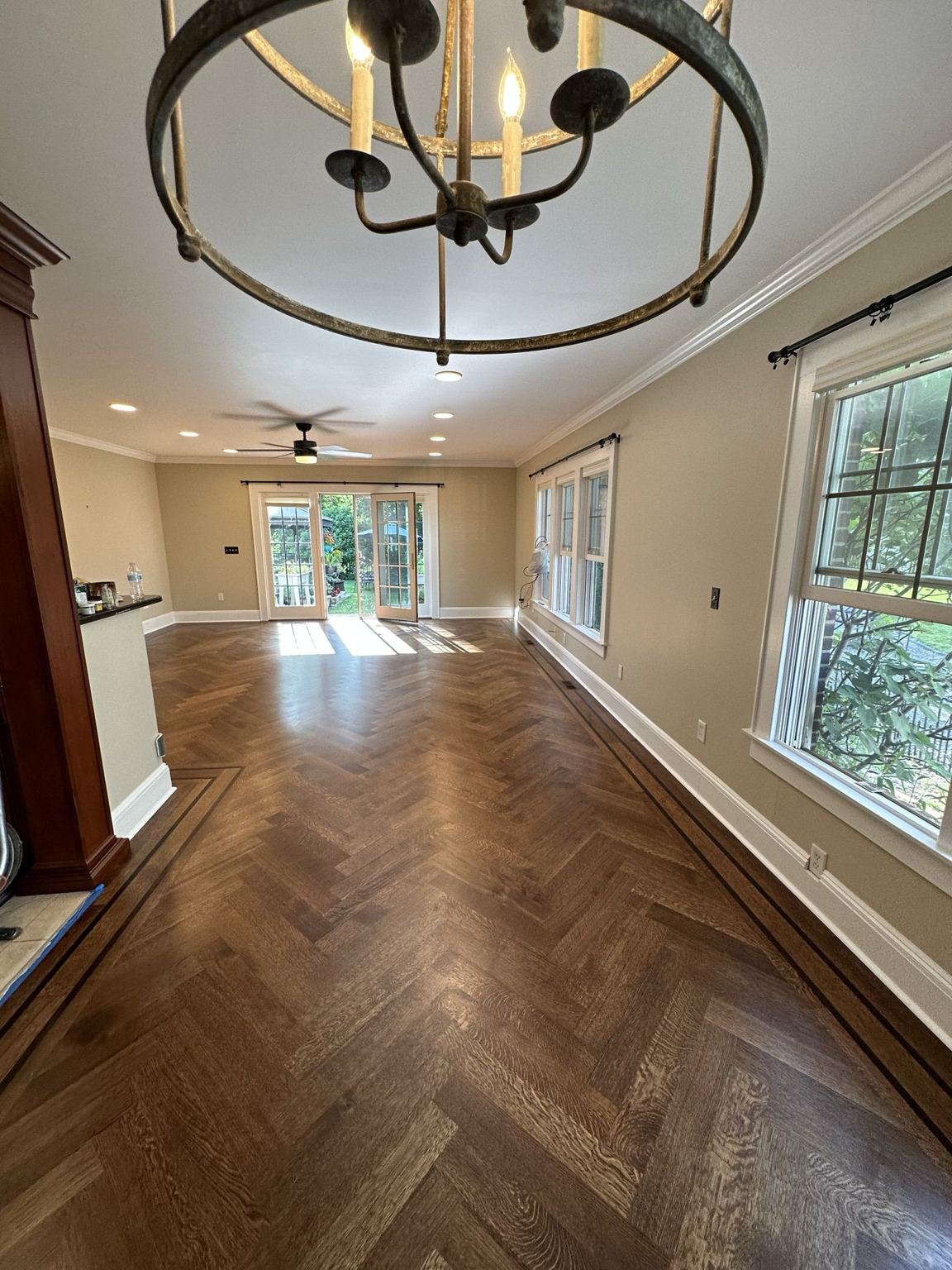
On HQ's documented Bound Brook herringbone project, the house had concrete on one side and plywood on the other. Both surfaces were leveled into one installation plane, and the recorded system included Bona R540 moisture primer with Quantum R851 adhesive. That is evidence from one project—not a universal specification for every home.
What should a New Jersey floor assessment document before installation?
The assessment should identify the flooring construction, wood species when known, subfloor type, temperature and relative humidity, test method, meter settings, representative readings, unusual high areas, flatness, visible damage, and the proposed installation system. If a condition is outside the applicable requirement, the cause and next step should be documented before work begins.
For a hardwood installation in North or Central New Jersey, send HQ the project address, approximate square footage, photographs of the existing floor and exposed substrate, the flooring product information, and any known history of leaks or dampness. The site visit can then answer the questions a photograph cannot.
REAL HQ PROJECT · DOCUMENTED START TO FINISH
A real two-substrate installation in Bound Brook
PRIMARY TECHNICAL SOURCES
Documents used for this guide
- NWFA Installation GuidelinesMoisture testing of wood flooring, wood subfloors, concrete, documentation, and jobsite conditions.
- NWFA Interior Evaluation Jobsite ChecklistSubstrate evaluation, manufacturer-required tests, flatness, readings, and documentation fields.
- Bona R540 Technical Data SheetCurrent product uses, limitations, substrate preparation, application, and compatible adhesive-system instructions.
The floor decides. We just read it honestly.
Call or text (201) 926-6797, or book a floor assessment — photos, ZIP code, and the floor’s condition are all we need to point you to the right level of care. More guides in the knowledge center.